How to import matcha from Japan: direct sourcing for serious buyers
Japan's tea export market hit record highs in 2025; demand now exceeds supply for the first time in decades. Here is how to import Japanese matcha through direct producer relationships, including the four sourcing channels and the major matcha green tea powder exporters.
12,612t Japan tea exports 2025+43% year-over-year growth32% goes to the US
茶
Written from the source side
Import Matcha is owned by a Japanese founder from a tea farmer family. We source directly from producers in Chiran, Kagoshima Prefecture. This guide is written from the perspective of someone who has navigated the Japanese tea supply chain from the inside, not from a buyer speculating about how it works.
Where to import matcha from Japan: 4 sourcing channels
For businesses asking where to import matcha from Japan, the practical answer is four channels, each with different tradeoffs on minimum order, quality control, lead time, and complexity. The right one depends on your volume, regulatory market, and how much of the supply chain you want to manage yourself.
Channel
Typical MOQ
Quality control
Best for
Direct from a producer (Noka)
50–100kg
Single farm, year-to-year variance
Buyers prioritizing single-origin story over consistency, with Japanese-language capability
Japanese wholesaler / refiner (Tonya)
100–500kg
Blended for consistency, strong QC
Volume buyers wanting consistent flavor and export-ready documentation
Japan-based importer with direct producer relationships
5–20kg
Direct sourcing, sample-first model, compliance handled
Cafés and brands wanting Japan-direct quality without navigating the supply chain themselves (Import Matcha sits here)
B2B marketplace (Alibaba etc.)
10–25kg
Variable, transshipment risk
Lowest-trust option; not recommended for cafes that need verifiable origin
A note on geography: "where" matters at two levels — the channel above, and the Japanese region. The four major matcha-producing regions are Uji (Kyoto) for heritage premium, Chiran (Kagoshima) for award-winning single-origin with strong supply, Nishio (Aichi) for high-volume culinary grade, and Shizuoka for diverse mid-tier. See the regions section below for tradeoffs. Channel and region together determine your access to authentic Japanese matcha at viable cost.
Importing matcha from Japan without the complexity
Import Matcha is a Japan-based importer with direct producer relationships in Chiran, Kagoshima. Single-origin, milled to order, 5kg MOQ, samples before commitment.
Matcha originates in Japan. The specific cultivation technique, growing Camellia sinensis under shade structures for 20 or more days before harvest, then steaming, drying, and stone-milling the leaves, was developed and refined in Japan over centuries. While China, South Korea, and other countries now produce green tea powder, Japanese matcha has distinct characteristics that result from this specific process.
Shading forces the tea plant to produce more chlorophyll and L-theanine while suppressing catechin development. The result is vivid green color, umami-rich flavor, and the characteristic "covered aroma" (ooika) that defines premium matcha. Green tea powders produced without extended shading, or using different processing methods, have fundamentally different chemical and sensory profiles.
The practical reality for businesses: if your product claims to use "matcha" and your customer base knows what matcha should taste and look like, sourcing from Japan is not just a marketing decision. It is a quality decision. The amino acid profiles, the color stability, and the flavor complexity of properly produced Japanese matcha are measurably different from alternatives.
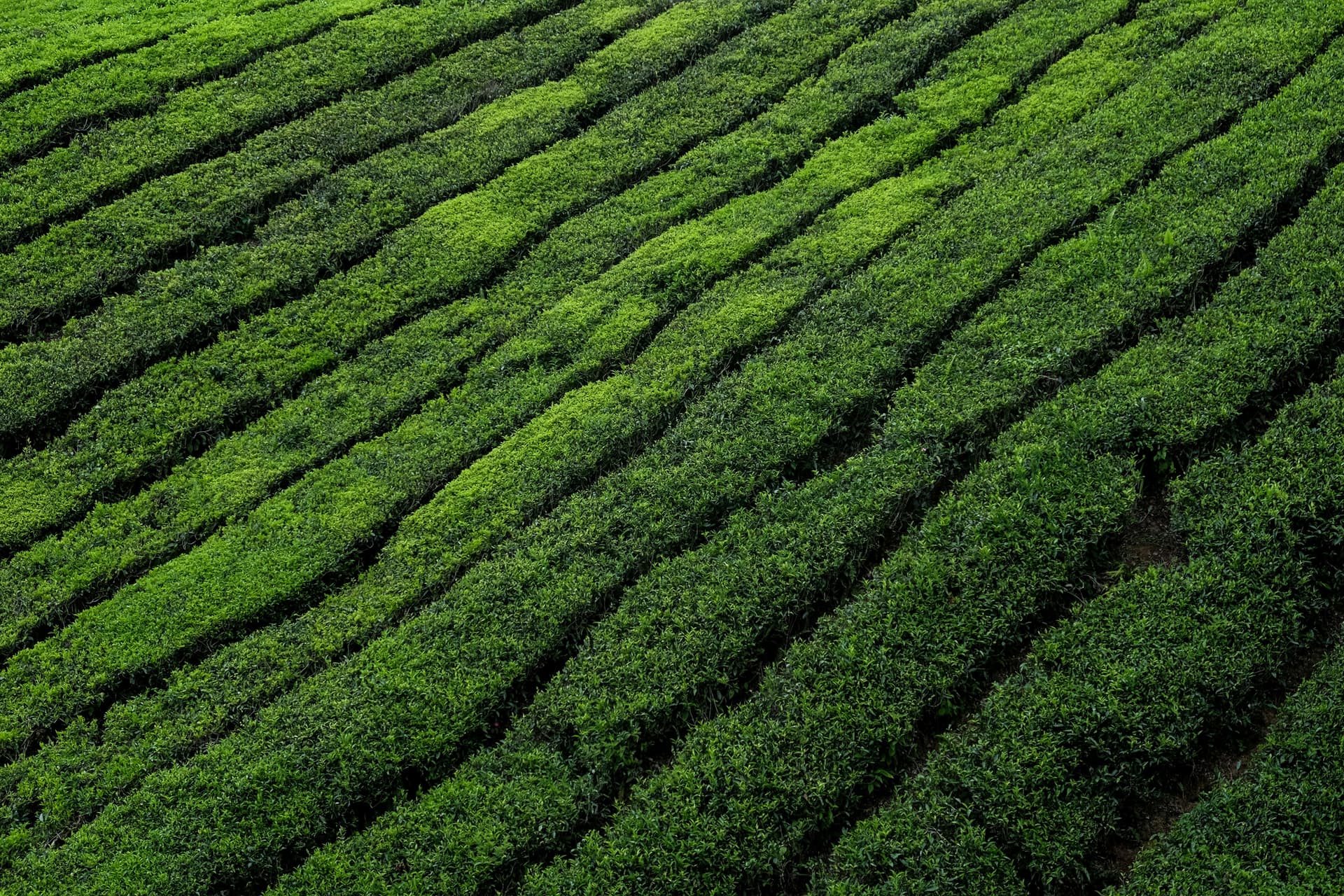
Shade cultivation for 20+ days produces matcha's distinctive color and umami
Japan's matcha regions: where quality comes from
Japan has several major tea-producing regions, each with distinct characteristics. Understanding these differences matters because region affects flavor profile, supply availability, and price.
Uji, Kyoto — The heritage region
Centuries of matcha tradition
Highest brand recognition and price premium
Production dropped 40% in 2025 due to heat stress
Supply scarce and increasingly expensive
Best suited for ultra-premium retail positioning
Chiran, Kagoshima — Japan's largest tea municipality
Responsible for 16% of Japan's total tea production
National production award winner five consecutive years
Strong supply capacity with consistent quality
Where our matcha comes from
Nishio, Aichi — The industrial powerhouse
Largest single-city matcha producer
Focused on high-volume culinary and food-service grade
Strong infrastructure for large-scale processing
Good option for volume buyers prioritizing cost efficiency
Shizuoka — Japan's largest tea prefecture overall
Dominant in sencha production, with growing matcha output
Diverse microclimates across the prefecture
Quality ranges widely by producer
Often competitive on price for mid-tier grades
A common misconception: Uji matcha is automatically superior. In reality, quality varies enormously within every region. A well-cultivated, properly processed matcha from Kagoshima can exceed a mediocre Uji product. Region provides context about growing conditions and tradition; it does not guarantee quality. What matters is the specific producer, their cultivation practices, shading duration, harvest timing, and processing skill. For how to evaluate suppliers in each region, see our matcha tea import guide. For the underlying production process and how harvest order (ichibancha, nibancha, akibancha) affects flavor, see how matcha is made and aracha, tencha, and matcha sourcing.
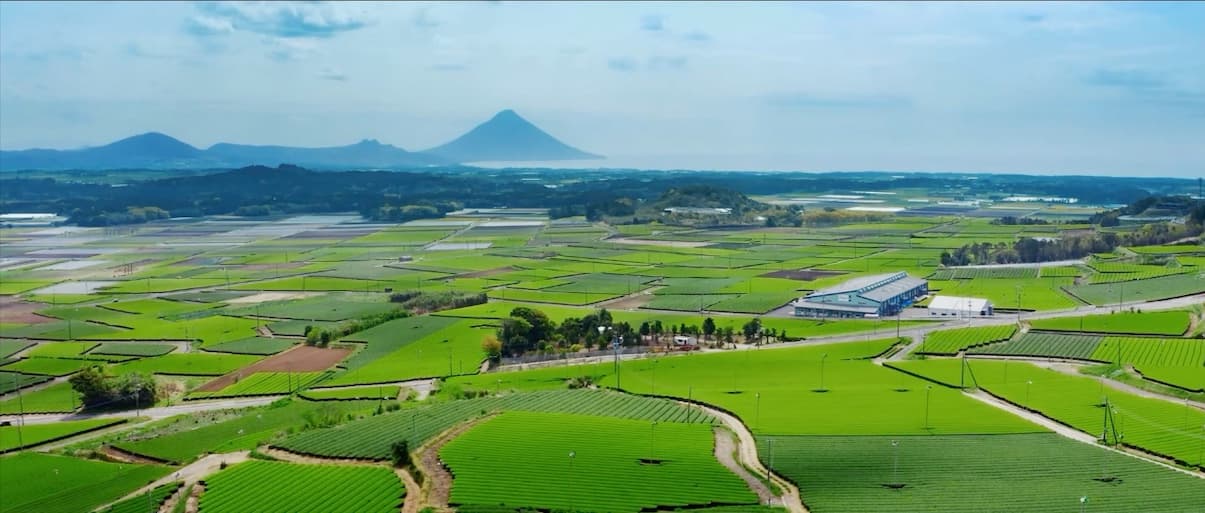
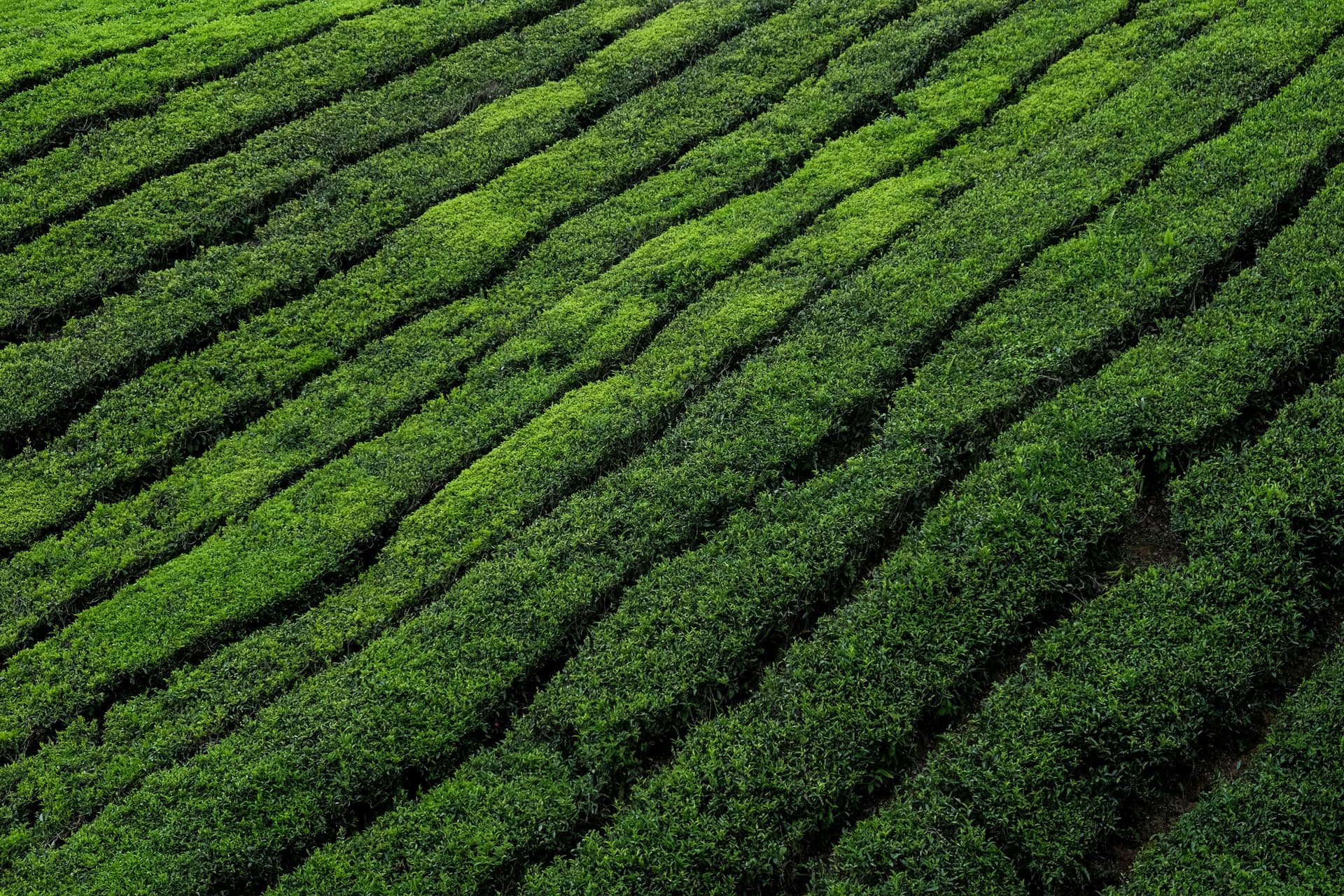
Tea fields in Kagoshima, Japan's largest tea-producing prefecture
Finding and vetting Japanese matcha suppliers
The Japanese tea trade operates differently from most commodity markets. Understanding the supplier ecosystem prevents costly mistakes.
The three supplier paths
Path 1: Direct from producers (Noka). You buy from a farm or cooperative that cultivates, processes, and sometimes mills their own matcha. Advantages: maximum traceability, single-origin story, potentially lower prices at volume. Challenges: language barriers, limited export experience, smaller production capacity, flavor varies year to year based on weather.
Path 2: Through a wholesaler/manufacturer (Tonya/Chasho). The Tonya/Chasho buys crude leaf from multiple farms, refines it, blends for consistency, and mills to specification. This is how most professional-grade matcha reaches international markets. Advantages: consistent flavor across batches, strong QC infrastructure, experienced with export documentation. Challenges: less single-origin story, typically higher MOQs.
Path 3: Through an established importer with direct relationships. You work with a company that has existing producer relationships in Japan, handles sourcing, quality control, compliance, and logistics. This is what Import Matcha does. Advantages: no need to navigate the Japanese supply chain yourself, compliance support included, lower risk for first-time importers. Challenges: less control over producer selection than direct sourcing.
Vetting checklist for any Japanese supplier
When searching for matcha green tea powder exporters, you will find all three types represented online. The critical difference is transparency: can the exporter trace their matcha to a specific region and producer, or are they simply resellers? Regardless of which path you take, verify these before committing to any order:
Verification point
What to check
Red flag
Origin documentation
Certificate of Origin specifying prefecture and municipality
Only says "Made in Japan" without region
FDA registration (for US)
Active 11-digit FDA Registration Number, verifiable in FDA database
Cannot provide number or number is inactive
Food safety certification
HACCP, FSSC 22000, or ISO 9001
No third-party food safety audit
EU compliance knowledge
Can explain difference between Japanese MRLs and EU MRLs
"Our tea meets Japanese standards" (insufficient for EU)
Sample availability
Willing to send 50g samples with lot-specific CoA
Only generic marketing samples, no documentation
Production transparency
Can identify which farms or regions their leaf comes from
Vague about sourcing, only discusses pricing
Japanese matcha green tea powder exporters: how to spot the real ones
Search "matcha green tea powder exporters" and you will get pages of B2B marketplace listings, trading-house catalogues, and re-shippers operating out of port cities. Most look identical from the outside; the differences only show up after you commit a deposit. The shorthand for separating real Japanese matcha green tea powder exporters from re-shippers: a real exporter can name the prefecture, the producer, and the harvest year; can produce a Japanese export license number on request; and can show you a Certificate of Origin issued by the Japan Chamber of Commerce, not a Bill of Lading from a third country. Re-shippers and transshipment operations cannot — they buy from anywhere, repack in Japan, and rely on the "Made in Japan" marking on the carton rather than verifiable origin documentation.
A second tell: real exporters quote in JPY by default and offer pre-shipment lab testing per lot; re-shippers quote in USD with discounts that look 30–50% under market and resist any per-lot CoA request. If your shortlist of matcha green tea powder exporters from Japan cannot meet that bar, treat them as commodity middlemen, not Japanese supply.
Import matcha from Japan without the sourcing complexity
We maintain direct producer relationships in Kagoshima so you don't have to navigate the Japanese supply chain alone. Milled-to-order, compliance documentation included.
Import Matcha is founded and operated by a Japanese sourcing specialist with direct producer relationships in Chiran, Kagoshima. See our wholesale program or request samples.
Verifying authenticity: avoiding fake Japanese matcha
Transshipment fraud is a documented problem in the matcha trade. Chinese green tea powder gets imported to Japan, repackaged, and re-exported as "Japanese matcha." The price is typically 30–50% below market for genuine Japanese product. Authentic matcha imported from Japan can be verified by chemical signature, prefecture-specific Certificate of Origin, and lot-level Certificate of Analysis — counterfeit operations can fake the paperwork but cannot fake the lab profile. A third-party L-theanine and catechin assay is what separates real Japanese matcha from re-shipped product.
How to identify it: genuine Japanese matcha has measurably higher L-theanine content (above 2%), specific catechin ratios resulting from shade cultivation, and vivid emerald color that cheap alternatives cannot replicate. A "Japanese matcha" priced dramatically below market that tastes flat and lacks umami is almost certainly not what it claims to be.
Protection strategies include: requesting Certificates of Origin with specific prefecture identification, verifying factory locations independently, requesting and comparing Certificates of Analysis from reputable labs, and working with suppliers whose production chain you can verify.
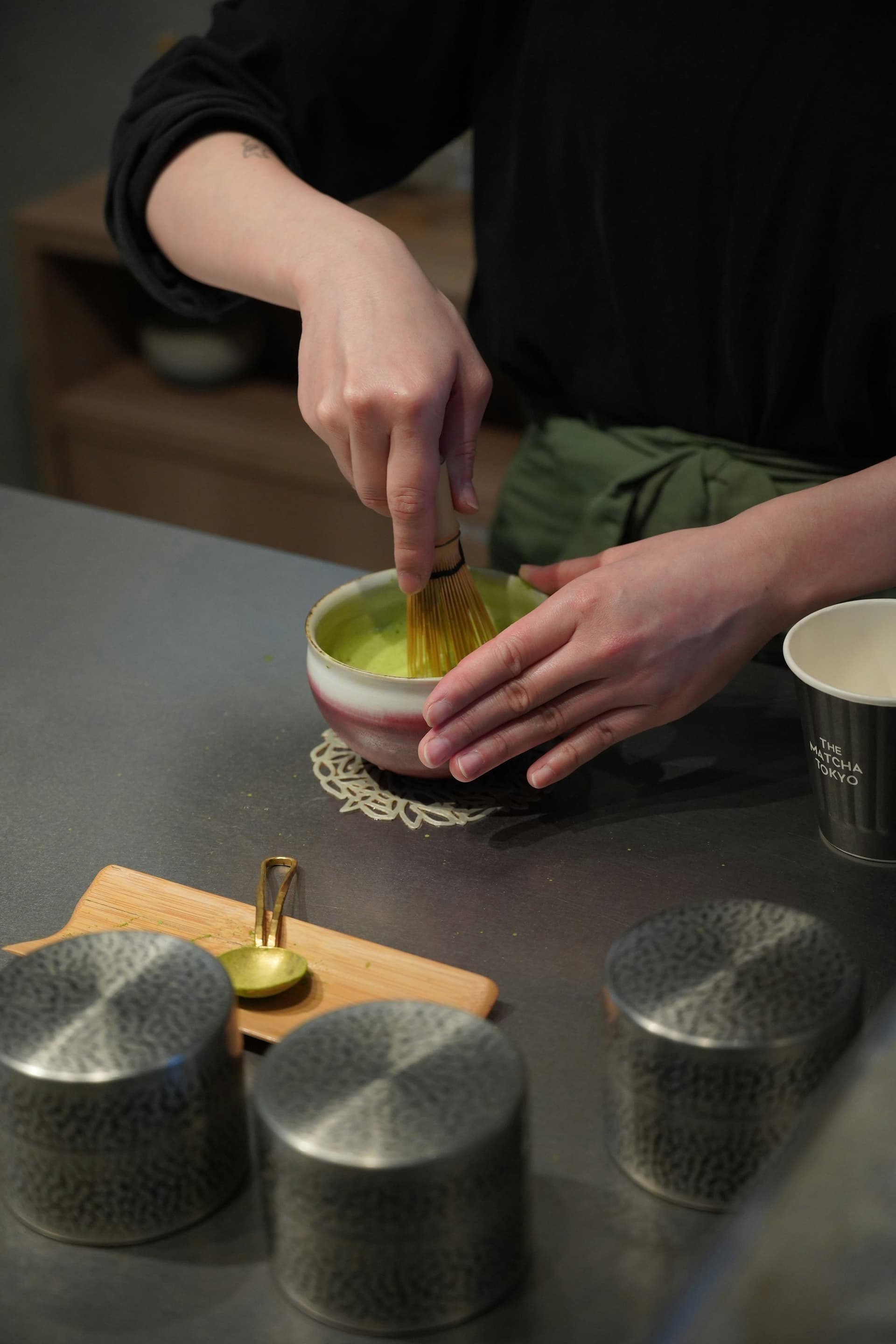
Hands-on quality verification is essential when evaluating suppliers
Import Matcha sources directly from Chiran, Kagoshima.
Minimum order: 5kg. Samples available before any commitment. Lead time: 5-7 weeks for first order.
Understanding how matcha moves out of Japan helps you anticipate timelines and avoid documentation errors.
1
Order confirmation and production
After purchase order and deposit (typically 50%), the producer processes and mills the matcha. "Milled to order" means tencha is ground only after your order is confirmed, preserving maximum freshness. Allow 1–3 weeks depending on volume.
2
Quality testing and documentation
Certificate of Analysis prepared for each lot. If targeting the EU, pre-shipment pesticide testing against EU MRLs is essential at this stage. Certificate of Origin issued. For organic products, Certificate of Inspection via TRACES NT system must be validated before departure.
3
Export packaging and logistics
Matcha is nitrogen-flushed in aluminum bags, packed in double-walled cartons. Freight booked: air for premium grades, reefer container for large culinary volumes. Export customs clearance handled by the supplier (under FOB terms).
4
Transit
Air freight: 3–7 days to most destinations. Sea freight: 30–60 days. Your customs broker should receive advance documentation to prepare import filings.
5
Import clearance and delivery
Broker files Prior Notice (US) or pre-declaration (EU). Customs inspection, if triggered, involves document review and potentially lab sampling. On delivery, retain a library sample from each lot.
Import compliance: US, EU, and other markets
United States
FDA requirements for matcha imports: active Food Facility Registration for the Japanese supplier, Prior Notice filing before arrival, and FSVP (Foreign Supplier Verification Program) documentation maintained by the US importer. FSVP is the largest compliance burden; you must prove your foreign supplier meets US safety standards with documented evidence including food safety plans, hazard analysis, and audit records.
Radiation testing under Import Alert 99-33 was deactivated in September 2021 and is no longer mandatory. Some buyers still request voluntary Cesium-134/137 certificates for consumer confidence.
European Union
The EU's pesticide Maximum Residue Limits are the critical compliance barrier. Japanese domestic tolerances for common tea pesticides are 100 to 2,500 times higher than EU limits. Specifically: Acetamiprid (Japan 30 ppm vs EU 0.05 ppm) and Dinotefuran (Japan 25 ppm vs EU 0.01 ppm). You must order "EU-compliant" lots explicitly; standard Japanese stock will fail EU testing.
For organic imports, the TRACES NT Certificate of Inspection must be validated before the shipment departs Japan. Missing this deadline means the goods permanently lose organic status in the EU, with no retroactive correction possible.
Australia
DAFF biosecurity requirements: pure green tea powder is generally permitted without an import permit when commercially packaged and free of insects. Mixed products (matcha blended with milk powder, spices, etc.) fall under different rules and may require permits.
Shipping matcha from Japan without destroying it
Matcha is a fragile product. Chlorophyll breaks down above 25 degrees Celsius, lipids oxidize on oxygen exposure, and moisture above 5% leads to clumping and mold risk. Shipping method is not a cost optimization decision; it is a quality decision.
Method
Transit
Best for
Risk
Air freight
3–7 days
Ceremonial/premium latte grade, orders under 300kg
Low
Reefer sea container (FCL)
30–60 days
Large culinary volumes, 300kg+
Low (temperature controlled)
Dry sea container
30–60 days
Not recommended for matcha
Severe: internal temps can hit 60°C
We coordinate logistics for every order. Premium grades ship by air freight from Japan. Large culinary orders use dedicated reefer containers. For a full cost breakdown including freight, duties, and brokerage, see our matcha import cost guide.
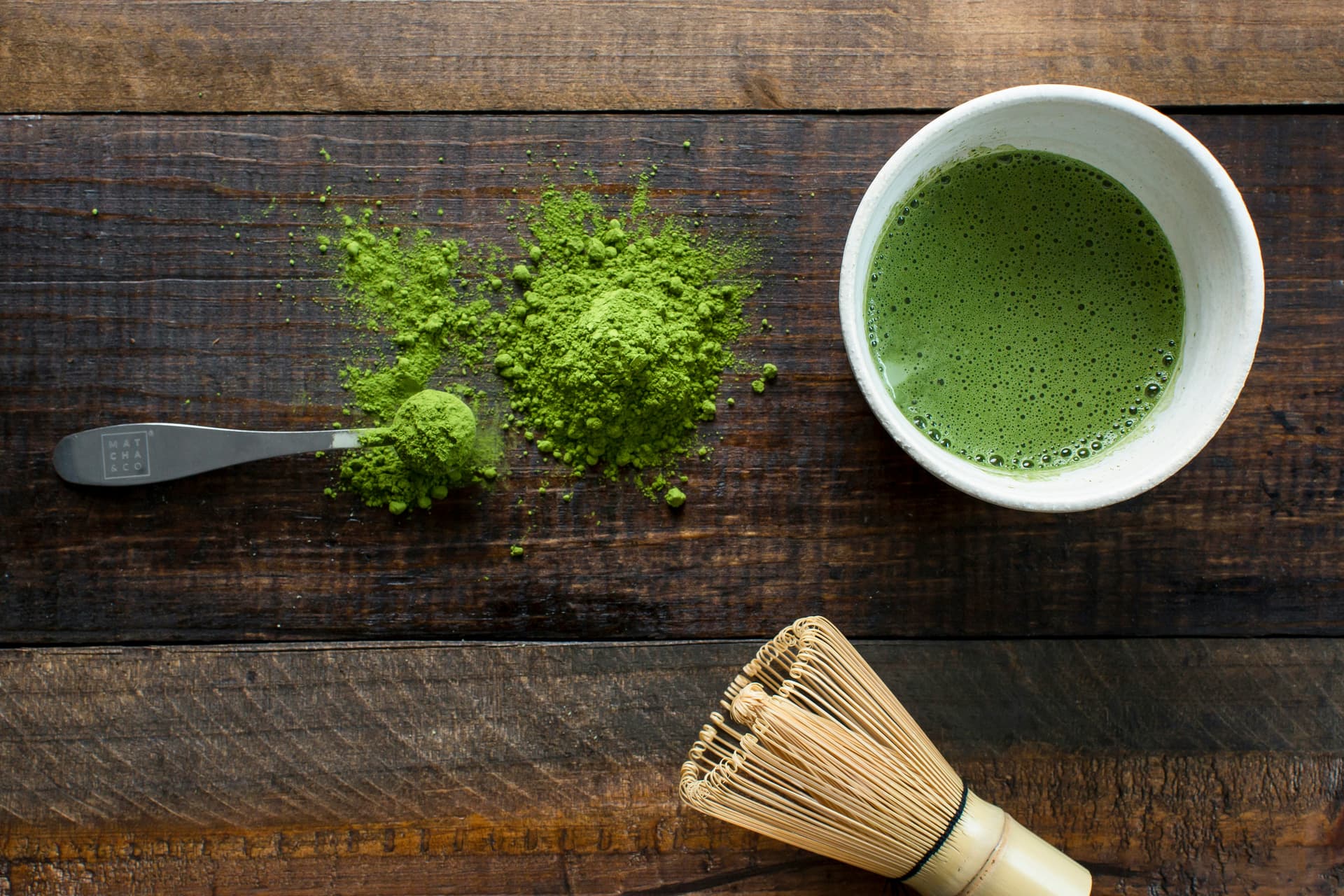
Proper shipping preserves the vivid green color of freshly milled matcha
Working with Japanese suppliers: cultural context
Japanese business culture affects how supplier relationships develop. Understanding these dynamics improves outcomes.
Relationship before transaction. Japanese producers prioritize long-term partners over one-time buyers. A first order is a test of compatibility, not a negotiation to minimize price. Asking for the lowest possible price on a first order signals short-term thinking and reduces your priority.
Communication style. Direct refusals are rare. "That would be difficult" often means no. "We will consider it" may mean the same. Having a Japanese-speaking intermediary or working with an importer who understands these nuances prevents miscommunication.
Seasonal rhythm. The matcha calendar follows harvest cycles. First flush (shincha) arrives in April–May. Orders for the following year's supply are ideally discussed by autumn. Last-minute requests during peak season strain the relationship and may not be fulfilled.
Payment reliability matters. Paying invoices on time, every time, is the single strongest trust signal in Japanese business. Delays or disputes over payment terms damage relationships disproportionately to the amounts involved.
Understanding Japanese tea culture strengthens supplier relationships
Frequently asked questions
FAQs
There is no single "best" region. Uji (Kyoto) has the strongest brand recognition; Kagoshima is the largest producer with five consecutive national awards; Nishio specializes in high-volume production; Shizuoka offers diverse microclimates. Quality depends on the specific producer, not just geography. A well-made Kagoshima matcha routinely outperforms a mediocre Uji product.
Verify FDA registration (for US market), request food safety certifications, ask for lot-specific Certificates of Analysis, and sample before committing. A reliable supplier specifies origin by prefecture, demonstrates regulatory knowledge for your target market, and provides documentation without resistance.
Kyoto commands a heritage premium but production dropped 40% in 2025, making supply scarce. Kagoshima benefits from volcanic soil, longer growing seasons, and strong production capacity. Chiran matcha from Kagoshima has won national awards for five consecutive years. For many businesses, Kagoshima offers better value and more reliable supply than Kyoto.
Yes, and it is recommended for buyers placing recurring orders. Spring harvest season (April–May) is the ideal time. Schedule visits in advance. Having a Japanese-speaking contact, or working with an importer who facilitates introductions, significantly improves the experience.
Commercial Invoice with correct HS Code, Packing List, Bill of Lading or Air Waybill, Certificate of Origin (for Japan-US trade agreement tariff benefits), Certificate of Analysis per lot, and FDA Prior Notice Confirmation Number. Maintain FSVP documentation as required under FSMA.
From order to delivery: 2–4 weeks for production and milling, plus 3–7 days for air freight or 30–60 days for sea freight. Add 2–5 business days for customs clearance. Plan 4–6 weeks total for air-shipped orders, or 8–12 weeks for sea freight. First orders may take longer due to documentation setup.
Typical minimums for direct Japan sourcing: 50–100kg from producers, 100–500kg from wholesalers. At Import Matcha, we start relationships with test orders that let you evaluate quality before scaling. Contact us with your volume needs.
Direct importing offers maximum control but requires navigating language barriers, Japanese business customs, regulatory compliance, and logistics coordination. An established importer with direct producer relationships gives you the supply chain benefits of direct sourcing without the operational complexity. For most businesses entering the matcha market, starting with an experienced importer and transitioning to direct sourcing at scale is the practical path.
Import Matcha at a glance
Origin: Single-region, Chiran, Kagoshima, Japan
Minimum order: 5kg per shipment
First order lead time: 5 to 7 weeks (milled to order)
Regions served: US, Europe, Canada, Australia, New Zealand, South America, Africa