Wholesale matcha supplier for cafés

Single-origin Japanese matcha for cafés. Milled to order from Chiran, Kagoshima. Direct producer relationships, transparent terms, samples before commitment.

Minimum order
5kg per shipment (flexible to your situation)
Reference price
From JPY 21,000/kg second crop, before volume discounts
Lead time, first order
5–7 weeks (milled to order)
Lead time, recurring
Scheduled deliveries on your cycle
Origin
Single region, Chiran, Kagoshima, Japan
Grades available
Ceremonial, premium latte, culinary, hojicha
Certifications
JAS-organic available; non-organic also available
Regions served
US, Europe, Canada, Australia, NZ, South America, Africa
Samples
Available before any commitment

Request samples →

Wholesale matcha by region and country

Wholesale matcha buyers come to us with two different framings: by destination country, or by Japanese region. Below is how Import Matcha serves each — single-origin Chiran matcha shipped from Kagoshima, with US distribution support for café and brand customers.

Wholesale matcha distributor in the USA

Import Matcha is a Japanese-owned wholesale matcha supplier with café, restaurant, and brand customers across multiple regions — the United States, Europe, Australia, New Zealand, Mexico, and Brazil. For US wholesale specifically: single-origin matcha is milled to order in Kagoshima, shipped from Japan, with a California consolidation point for US-bound bulk orders.

Unlike a domestic-only US distributor that buys pre-milled stock from Japanese trading houses and resells, we maintain direct producer relationships in Chiran. That means milled-to-order freshness and faster response when supply tightens — important during the 2025 production drop that affected Uji and similar regions.

Most US wholesale demand we see is matcha latte programs — the dominant format in US specialty cafés. Premium latte-grade Chiran matcha holds its color, umami, and aroma against milk and oat-milk dilution, where lower-grade matcha turns flat under dairy.

US customers benefit from:

  • Single-origin matcha from a single Japanese region (Chiran, Kagoshima), not a blend
  • California consolidation for predictable domestic distribution
  • FDA Food Facility Registration on the Japanese supplier side

For café and brand operators sourcing matcha as a US wholesale buyer, the route is Kagoshima → California → your location.


Kagoshima wholesale matcha for cafés

Kagoshima is Japan’s largest tea-producing prefecture by volume, responsible for 16% of national tea production. Within Kagoshima, the Chiran district has won national tea production awards for five consecutive years. Import Matcha sources exclusively from Chiran producers, making us a Kagoshima wholesale matcha supplier with direct origin transparency.

Why Kagoshima matters for café wholesale matcha sourcing:

  • Volcanic soil and mountain water produce mineral-rich tea with vivid color and clean umami
  • Subtropical climate with longer growing seasons supports consistent supply when northern regions like Uji face heat-stress production drops
  • Stronger supply availability than the heritage premium Uji designation

For matcha latte programs specifically, Kagoshima’s profile — strong umami and vivid color from extended shading — translates well to milk-based drinks. The matcha holds its character when combined with steamed milk or oat milk, rather than disappearing under dairy as a lower-quality matcha would.

The questions you ask about coffee. Ask them about matcha.

Question
Your Coffee
Your Matcha
Where's it from?
You know the farm
?Do you know?
When was it processed?
Roast date on the bag
?Mill date?
Who produced it?
Named producer
?Trading company?
How was it stored?
Climate-controlled
?Unknown?
Can you verify any of this?
Yes
?Probably not

If you can't answer these about your matcha, you're serving something you wouldn't accept from a roaster.

Most cafés serve matcha that's:

Low grade: third harvest, coarse-milled, mixed with fillers
Stale: milled months ago, oxidized
Sometimes not even real matcha: powdered sencha or Chinese tea powder
Masked by sugar and milk to hide the taste

They don't know the difference because they've never tasted quality matcha. Their suppliers aren't educating them.

What changes when quality changes.

Quality Matcha
Low-Grade Matcha
Vibrant, stable green
Dull, yellowish green
Vegetal, present aroma
Flat or absent aroma
Balanced umami, clean finish
Bitter, requires sweetener
Smooth, full body
Chalky mouthfeel
Color holds in milk
Color fades quickly in milk

Your customers may not name the difference. They'll taste it.

Barista preparing matcha latte in cafe
Supply

Quality you can reorder without worrying about supply.

The problem with quality matcha: hard to source consistently at cafe volume. Small-batch producers can't supply. Large suppliers blend for cost.

  • Consistent supply from a single Japanese producer
  • MOQs built for your cafe volume
  • Steady restock that you can count on

Quality matcha you can actually get. Repeatedly.

Get in Touch
Barista serving matcha drinks in café

Try it against what you're serving now.

The comparison makes the case.

1

Request Samples

We'll send samples so you can taste the difference.

2

Prepare Side by Side

Make identical drinks with your current matcha and ours.

3

Evaluate

Compare color, aroma, taste, and texture.

4

Decide

The comparison makes the case.

For cafes that already care.

This is for you

  • Specialty coffee operators who apply quality standards to sourcing
  • Cafes where matcha is a real menu category
  • Operators who'd be embarrassed if customers knew their matcha source

Not a fit

  • Mass-volume operations prioritizing cost above all
  • Cafes where matcha is an afterthought
  • Operators indifferent to quality differences

If you don't care about quality, this isn't for you.

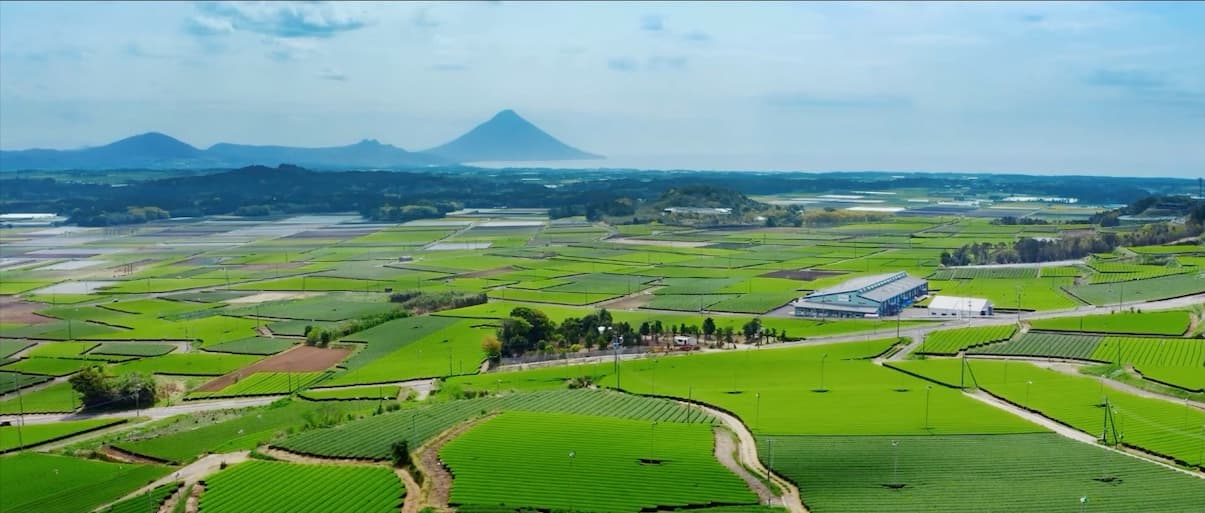
Aerial view of tea fields in Chiran, Kagoshima
Origin

From Chiran, Kagoshima

Our matcha comes from Chiran, Minamikyushu City, Japan's largest tea-producing municipality.

  • Kagoshima produces 16% of Japan's tea
  • Chiran tea has won national production awards 5 consecutive years
  • Volcanic soil. Mountain water. Shade-grown 20+ days.
  • 50+ years of producer expertise

FAQs

The minimum order quantity is 5kg per shipment. We are flexible depending on your situation. Contact us to discuss if your needs differ.

Pricing depends on grade and volume. As a reference point, our standard second crop matcha starts from JPY 21,000 per kg before volume discounts. Ceremonial grade is priced higher. Larger volumes receive better per-kg pricing. Contact us for a custom quote based on your grade mix and expected order frequency.

Because we mill to order for maximum freshness, the first order typically takes 5 to 7 weeks from order confirmation to delivery. From the second order onward, we work out a recurring schedule with you to ensure timely restocking. We ship directly from Kagoshima, Japan shortly after milling. US customers benefit from our California consolidation point for logistical efficiency.

Yes. Many customers order multiple grades for different uses.

Once you are set up, reordering is simple. Contact us or use your account to place repeat orders.

Yes. We encourage sampling before any commitment. Request samples through our form.

Our matcha is single-region from Chiran, Minamikyushu City in Kagoshima, Japan's largest tea-producing municipality responsible for 16% of Japan's tea production. Chiran tea has won national production awards for 5 consecutive years.

High-quality matcha has vivid, bright green color (not pale or reddish), distinctive covered aroma from proper shading, rich umami with minimal bitterness. Cheap alternatives often show yellow or brown tones and higher astringency, which your customers will notice in taste, color, and consistency.

Yes. Our matcha meets Japanese national production standards and comes from award-winning Chiran producers. Every batch is traceable to its producing region, with third-party testing for purity.

Chiran matcha is grown in mineral-rich volcanic soil with pure mountain water, producing tea with rich sweetness, minimal bitterness, and vibrant emerald color. The region's shaded cultivation and gentle steaming preserves chlorophyll and umami.

We offer JAS-certified organic matcha and non-organic (conventional) matcha. All products meet strict Japanese food safety standards. Contact us to specify organic or non-organic when requesting a quote.

We do not currently provide a certificate of analysis as a standard document. All matcha is sourced from award-winning, traceable Chiran producers and meets Japanese national production standards. If CoA is a requirement for your business, contact us to discuss your specific needs.

Unopened matcha stays fresh for 12 to 18 months. Once opened, use within 2 to 3 months for optimal flavor. After that, matcha is still safe to consume but better suited for lattes or baking where milk and heat mask some flavor loss.

Store matcha in an airtight container away from light, heat, and moisture, preferably refrigerated. We highly recommend refrigerating after opening to maintain vibrant color and fresh flavor.

Bulk matcha typically comes in sealed bags (500g, 1kg, or larger). Packaging is designed to maintain freshness and protect against light and moisture.

We ship matcha from Kagoshima, Japan, shortly after milling is complete. This preserves maximum freshness and aroma at the point of dispatch. For US customers, we ship in bulk to our California distribution point first, then distribute domestically for logistical efficiency.

We ship wholesale matcha internationally. Current customers are located across the United States, Europe, Canada, Australia, New Zealand, South America, and Africa. Contact us to confirm lead times for your location.

Contact us immediately. We will resolve any shipping issues.

Modern cafe interior

See the difference yourself.

Request samples. Compare against your current supply.

Request SamplesEmail Us